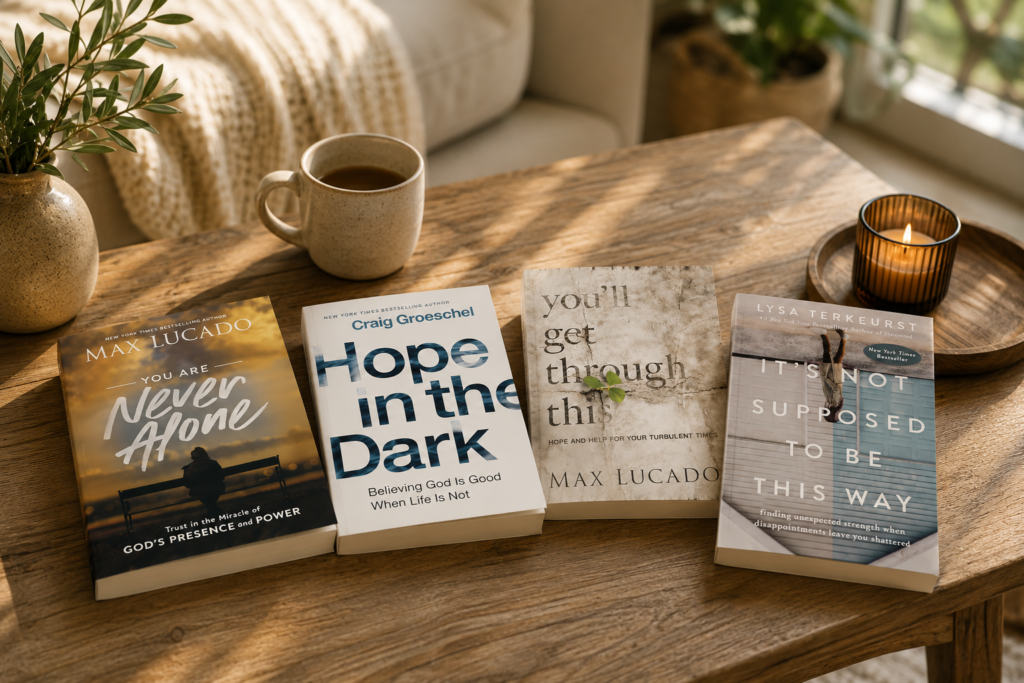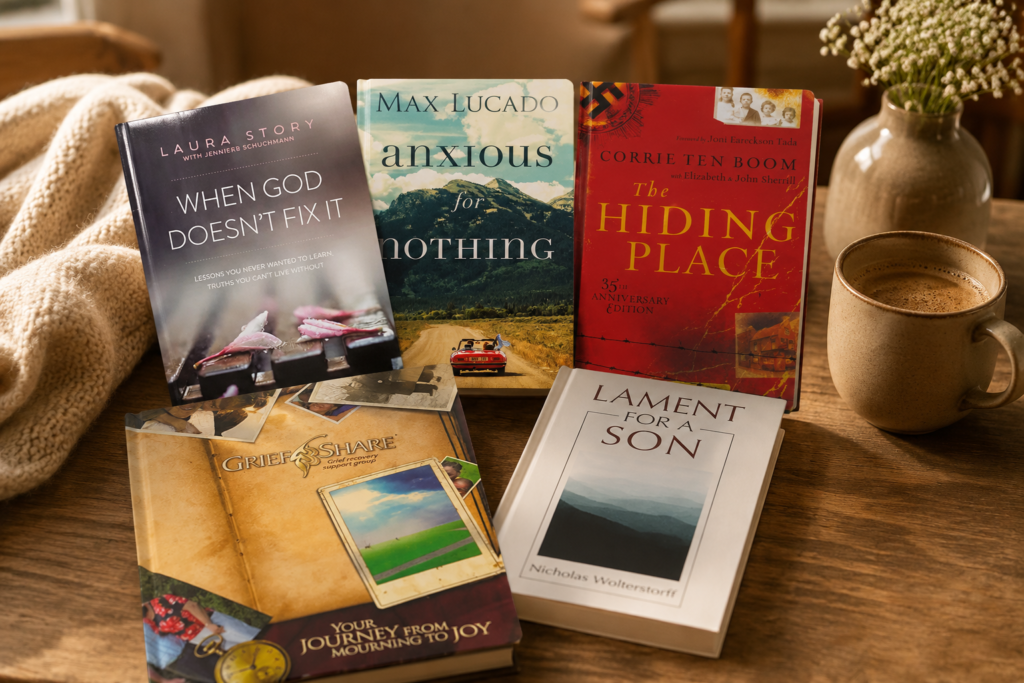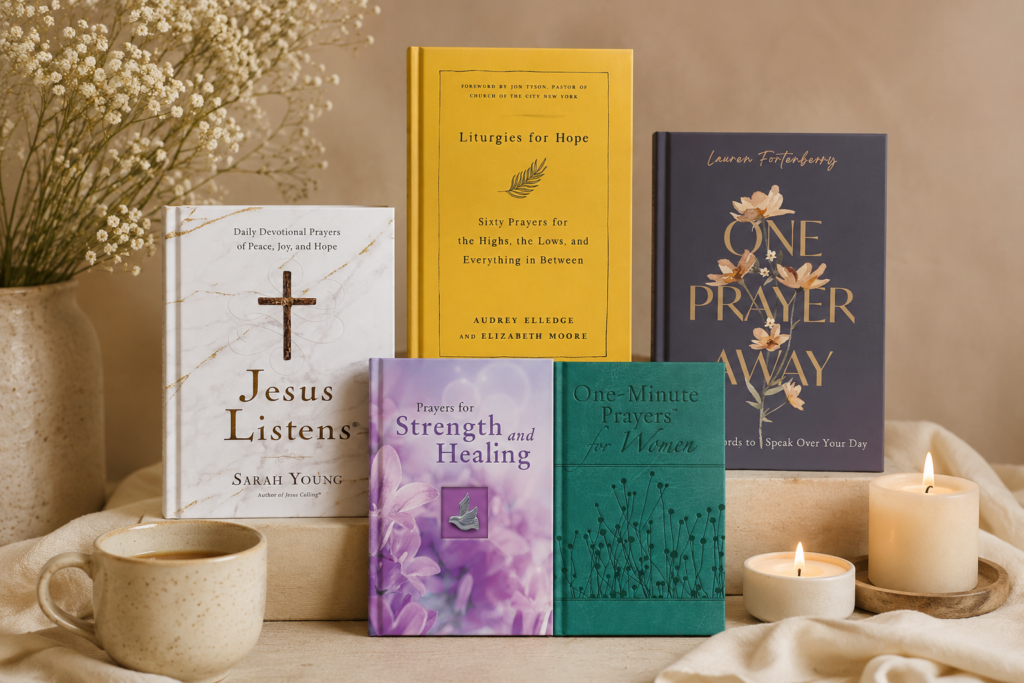
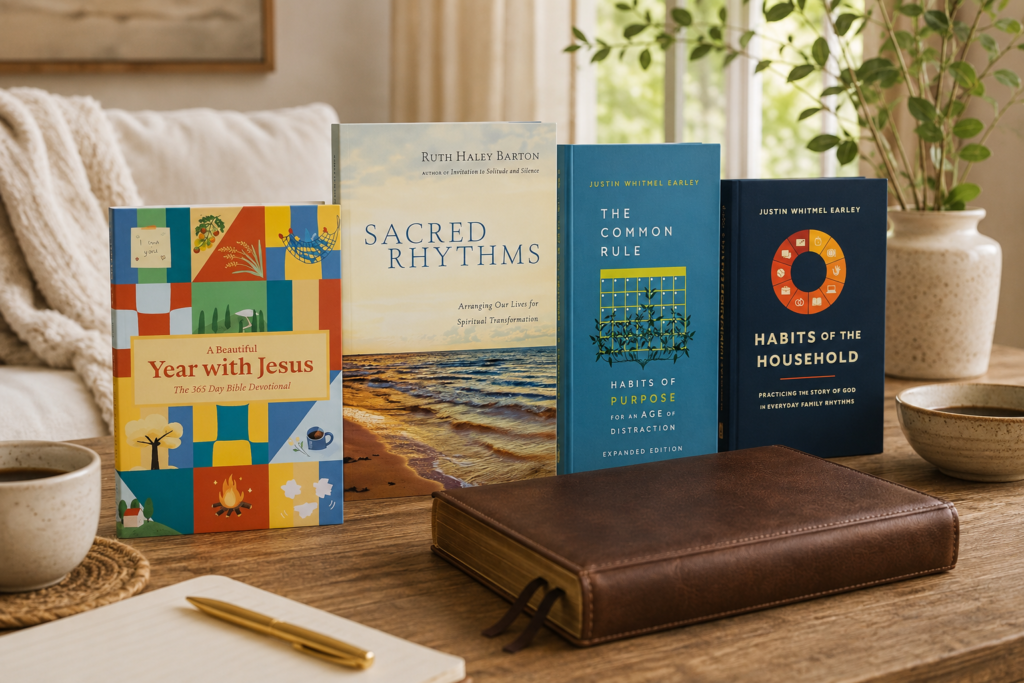
The right tools can turn spiritual intention into daily practice.
Building a consistent prayer life or daily Bible reading habit can feel like trying to start a fitness routine. You know it matters, you want to do it, but without the right setup, it’s easy to lose momentum after a few days.
The difference often comes down to having simple tools that remove friction and make showing up easier.
The products in this guide support the kind of sacred rhythms that actually stick: daily Scripture reading, journaling, prayer, Sabbath rest, gratitude, and reflection. Some are books that teach you the framework, others are practical items like journals and Bibles that help you do the work.
A few are small environmental cues like candles or mugs that signal to your brain that this time is set apart.
What they have in common is that they make spiritual disciplines feel less abstract and more doable in everyday life.
Best Christian products for building sacred rhythms
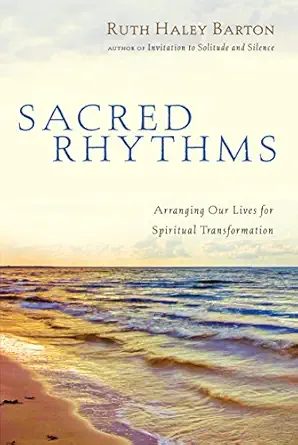
1. Sacred Rhythms by Ruth Haley Barton
This book is the most direct match for the topic. Barton walks through seven spiritual disciplines including solitude, Scripture, prayer, self-examination, discernment, and Sabbath, then shows you how to turn them into a sustainable rule of life.
The book doesn’t just inspire you, it gives you practical exercises to try.
If you’re tired of vague advice about “spending more time with God” and want an actual framework, this is it.
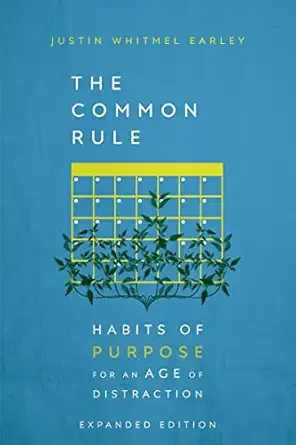
2. The Common Rule by Justin Whitmel Earley
Earley built this book around simple daily and weekly habits that anchor your life in God as opposed to your phone. The habits are specific: things like kneeling in prayer each morning, eating a meal with others, and taking one hour of Sabbath each week.
What makes this book useful is that it doesn’t assume you have an extra two hours every day.
It’s designed for people with jobs, kids, and packed calendars who still want a meaningful spiritual life.
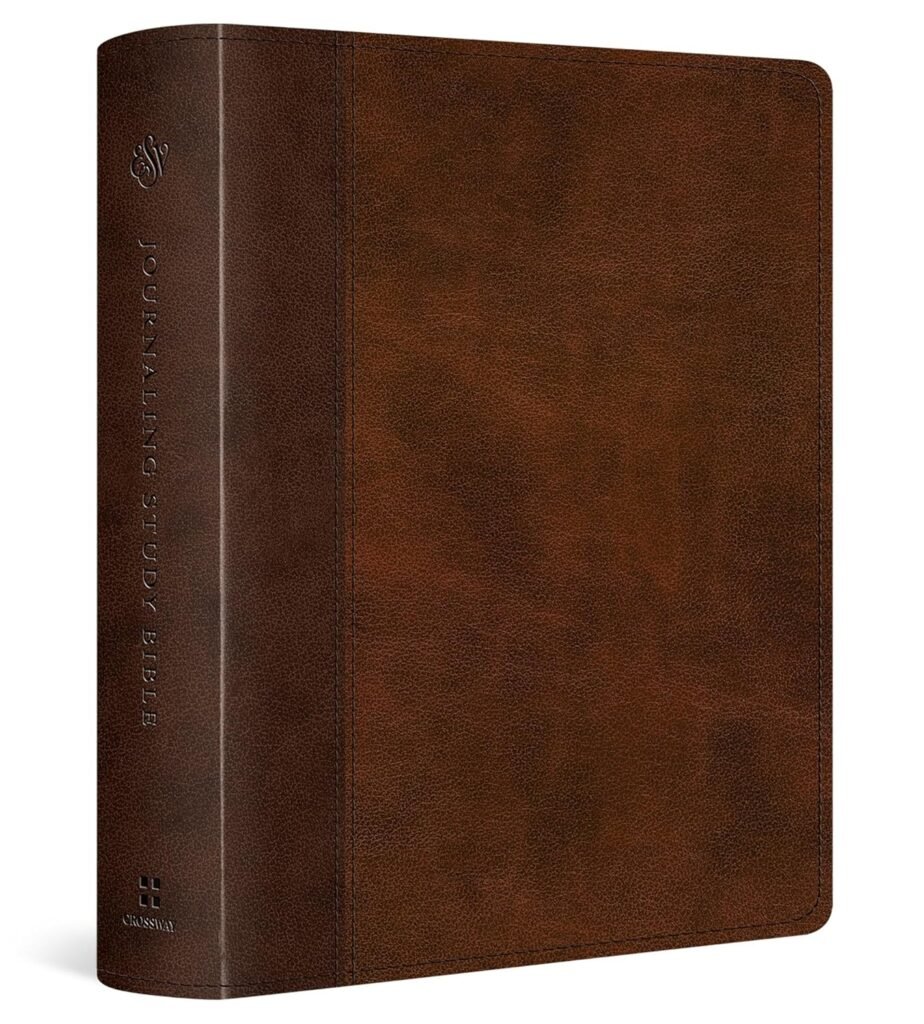
3. ESV Journaling Bible
A journaling Bible has wide margins on every page so you can write notes, prayers, or thoughts as you read. This turns Bible reading from a passive activity into an interactive conversation.
You can track themes, write down questions, or record what God seems to be saying.
Over time, your Bible becomes a record of your spiritual journey, not just a book you read.
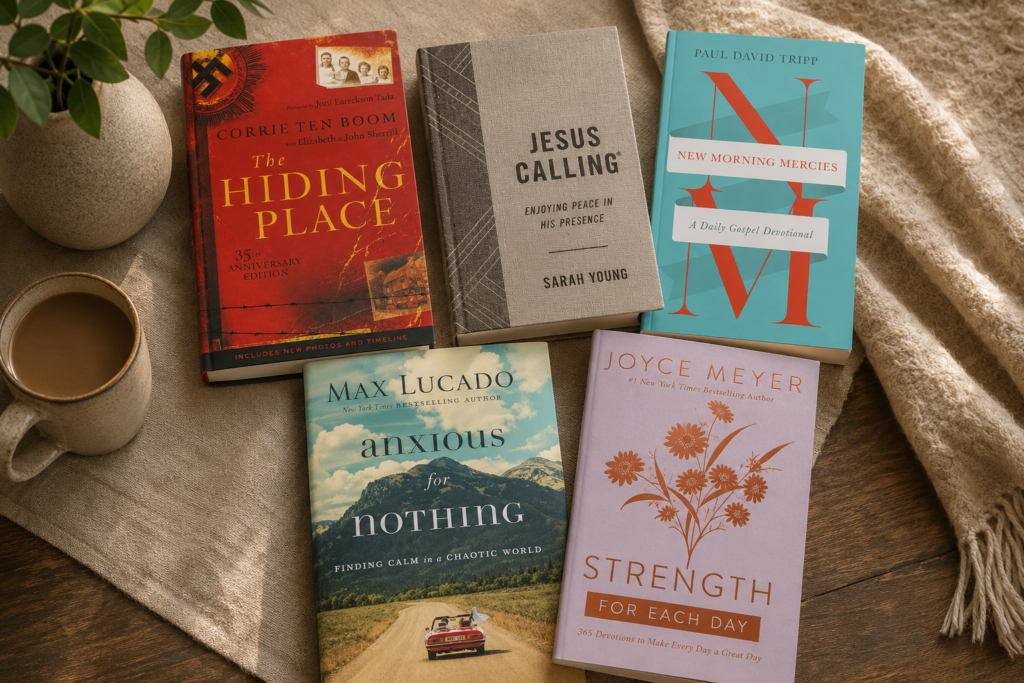
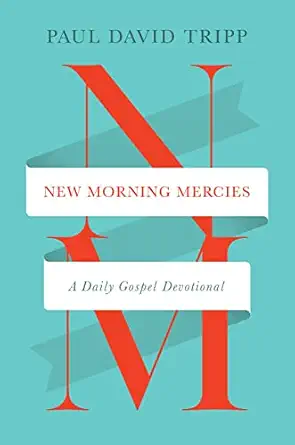
4. New Morning Mercies by Paul David Tripp
This is a one-year devotional with a short reading for each day. Tripp writes in a way that’s both theologically solid and emotionally honest.
The devotionals are gospel-centered, meaning they consistently point you back to what Jesus has done as opposed to just giving you a motivational pep talk.
If you want a devotional that helps you start the day with your mind oriented toward God, this one works well.
5. Habits of the Household by Justin Whitmel Earley
This book focuses on turning ordinary family routines into spiritual moments. It covers things like bedtime, mealtime, morning, and even screen time, showing how small liturgies can shape a household.
If you have kids or share a home with others, this book helps you think about how to build sacred rhythms into the life you already have as opposed to adding a separate “spiritual” layer.

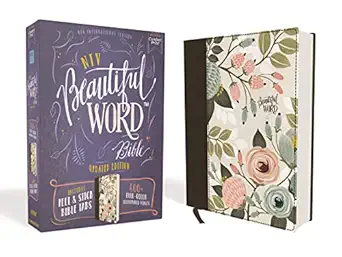
6. NIV Beautiful Word Bible
The Beautiful Word Bible includes full-color illustrations and hand-lettered verses throughout. For some people, beauty supports attention.
If a visually engaging Bible helps you slow down and actually read instead of skimming, it’s worth it.
The wide margins also give space for notes and art if you want to engage creatively with Scripture.
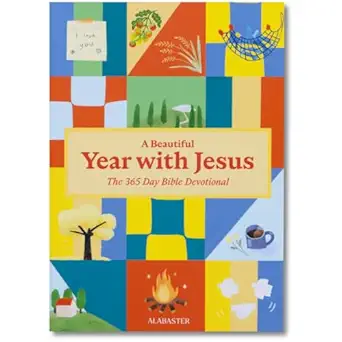
7. A Beautiful Year with Jesus (SC): The Daily Devotional For 365 Days in the Bible
A Beautiful Year with Jesus is a thoughtfully crafted devotional that combines Scripture, prayer, and contemplative imagery to invite you into a peaceful rhythm of daily connection with God. Created with simplicity and depth in mind, this 30-day devotional is especially suited for those who long to connect with God but struggle to find the time.
8. Scripture memory cards
Scripture cards are small, portable, and designed for memorization. You can keep a set on your desk, in your car, or by the kitchen sink.
The goal is to let a verse sink in over several days as opposed to just reading it once.
Memorization helps Scripture become part of your thought patterns, not just something you encountered in the morning.

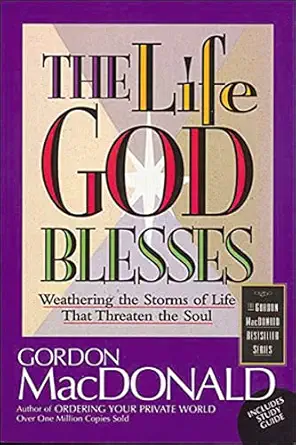
9. The Life God Blesses by Gordon MacDonald
MacDonald writes about cultivating a spiritual life that’s sustainable and deep as opposed to busy and performative. The book is especially helpful if you tend to equate spiritual growth with doing more activities.
It reorients you toward being present with God as opposed to checking boxes.
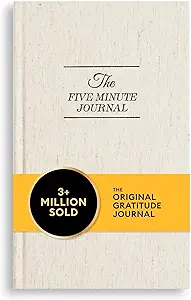
10. A gratitude journal
Gratitude journals usually have space to write three to five things you’re thankful for each day. This practice is deceptively simple, but it trains your brain to notice God’s goodness in ordinary moments.
Over time, gratitude becomes a reflex as opposed to something you have to force.
Which products to start with
If you’re just getting started and want the most practical foundation, go with a Bible you’ll actually read, a simple prayer journal, and one devotional book. That covers Scripture, prayer, and daily guidance without overwhelming you with too many tools.
For someone who already has a Bible and journal but needs help building structure, Sacred Rhythms by Ruth Haley Barton or The Common Rule by Justin Whitmel Earley will give you the framework you’re missing. These books don’t just tell you that spiritual disciplines matter, they show you exactly how to practice them in a way that fits real life.
If your biggest obstacle is just remembering to show up, invest in environmental cues. Put your Bible and journal in a basket by your favorite chair.
Get a mug that reminds you to read.
Light a candle. These small design choices reduce friction and make the habit easier to maintain when motivation runs low.
The best product is the one you’ll actually use consistently. Don’t overthink it.
Pick one or two things, try them for a month, and see what sticks.
Sacred rhythms aren’t about having the perfect setup, they’re about showing up regularly with whatever tools help you stay present with God.
Frequently asked questions
What’s the best Bible for someone who wants to start reading daily?
The best Bible is the one you’ll read. For most people, that means a translation that’s accurate but readable, like the NIV or ESV.
If you want help with context and understanding, get a study Bible.
To take notes as you go, get a journaling Bible. If you just want to read, a standard single-column Bible works fine.
How long should a daily quiet time actually take?
There’s no required length. Fifteen minutes of focused time is better than an hour of distracted skimming.
Start with what you can realistically do every day.
Consistency matters more than duration, especially at the beginning. You can always expand the time later once the habit is solid.
What if I miss days? Does that mean I failed?
No. Missing days is normal. The goal is to build a long-term pattern, not a perfect streak.
When you miss, just start again the next day without guilt or shame.
What matters is that you keep coming back, not that you never stumble.
Do I really need a separate prayer journal, or can I just pray?
You don’t need a journal, but many people find that writing helps them focus and process their thoughts. Journaling also creates a record you can look back on, which can be encouraging when you see how God has answered prayers or worked in situations over time.
Try it for a month and see if it’s helpful for you.
Is Sabbath really necessary, or is that just Old Testament law?
Sabbath rest is about trusting God with your time and breaking the constant pressure to be productive. It’s not about legalistic rule-keeping, this involves building a rhythm of rest and worship into your week.
Most people who practice Sabbath find that it makes the rest of the week more sustainable and more joyful, not just because they’re rested but because they’ve reconnected with why they’re doing everything else.
What’s the difference between a devotional and just reading the Bible?
A devotional usually includes a short Bible passage plus some teaching or reflection on it. Devotionals are helpful when you want guidance on how to apply Scripture or when you’re not sure what to read next.
Reading the Bible directly, without a devotional filter, is also valuable because you’re engaging with God’s Word on its own terms.
Both have a place. Many people do a devotional in the morning and read longer passages of Scripture at another time.
How do I keep this from feeling like just another obligation?
If spiritual disciplines feel like drudgery, something’s off. These practices are meant to help you experience God’s presence, not to earn God’s approval.
You might need to simplify your routine, change the time of day, or revisit why you’re doing this in the first place.
Sometimes the problem is that you’re trying to copy someone else’s rhythm instead of finding what actually works for you. Keep experimenting until you find practices that feel life-giving as opposed to draining.
Find out our Recommended Christian Resources to Grow Spiritually During Midlife; visit: https://illuminatedresources.com/christian-resources-to-grow-spiritually-during-midlife/