Introduction
Prayer tools and practices for daily life come in many forms, from traditional leather-bound journals to modern smartphone apps that send you reminders between carpool runs. The market offers everything from Scripture memory cards you can stick on your bathroom mirror to guided audio devotionals you can listen to while folding laundry.
Some products focus on structured prayer times with prompts and templates, while others support spontaneous conversations with God throughout your day.
Key differences include analog versus digital approaches (handwritten journals versus prayer apps), solo practices versus community-focused tools (personal devotionals versus group study guides), and time commitments ranging from 30-second breath prayers to hour-long contemplative sessions. Notable features across these products include Scripture integration, space for personal reflection, portability for busy schedules, and designs that thank the unique season of midlife with its competing demands of family, work, aging parents, and personal transitions.
Prayer Practices and Recommended Tools
1. Guided Prayer Journaling
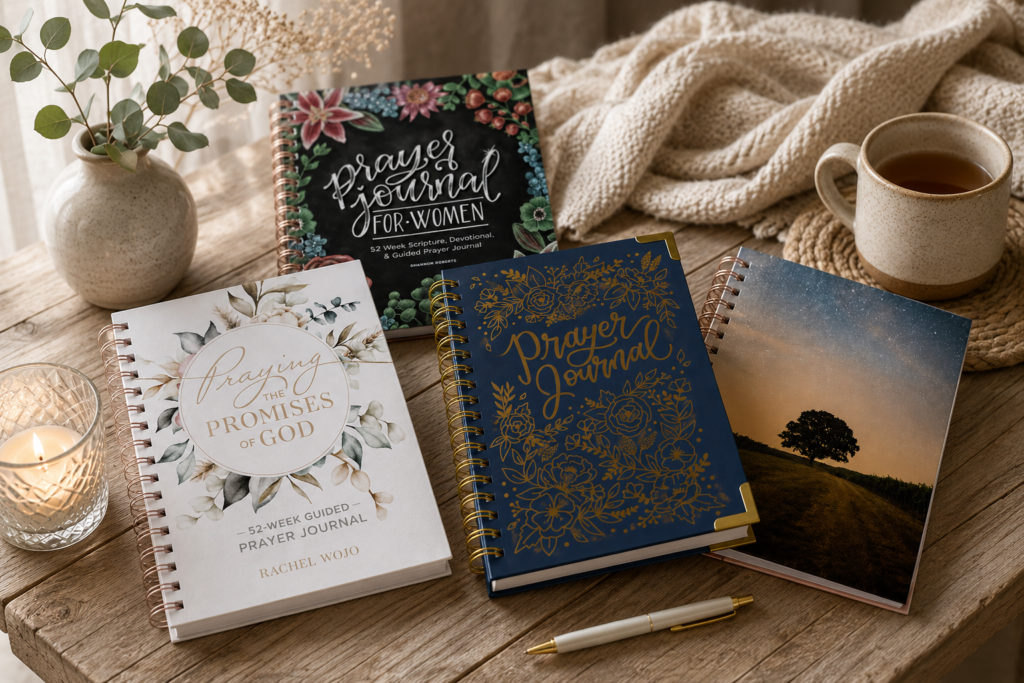
Prayer journals with structured prompts help you process the complex emotions of midlife without staring at blank pages wondering what to write. Look for journals that include gratitude sections, prayer request tracking, and Scripture reflection spaces.
Recommended Product: The Prayer Map for Women journal on Amazon offers a unique non-linear format where you fill in sections as opposed to writing paragraphs. Each page guides you through thanksgiving, confession, and intercession without requiring extensive writing time.

2. Morning Devotional Books
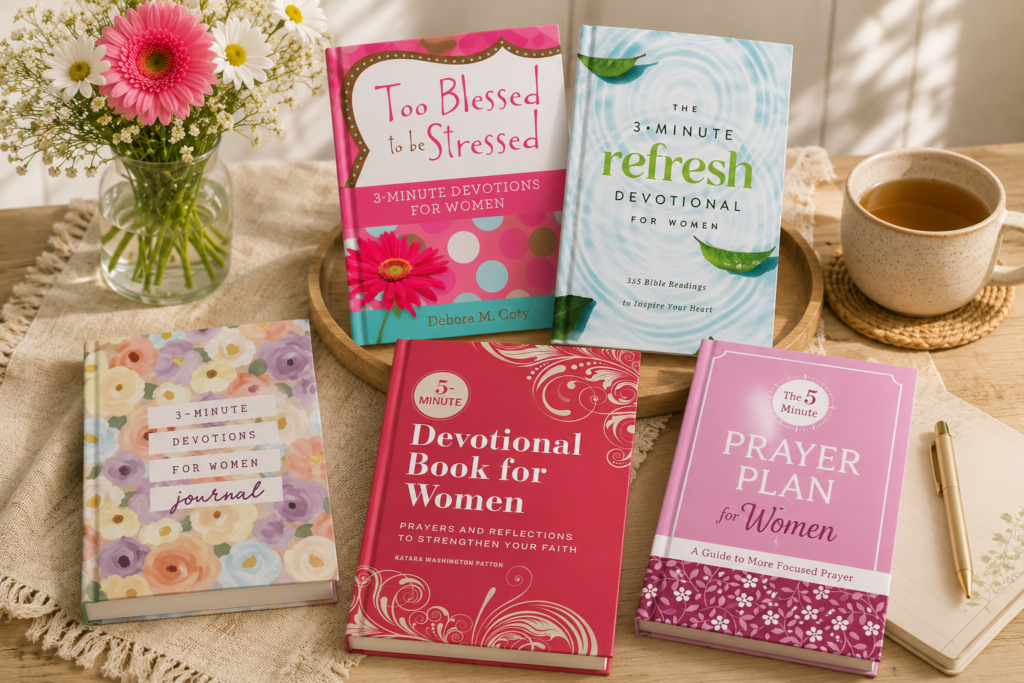
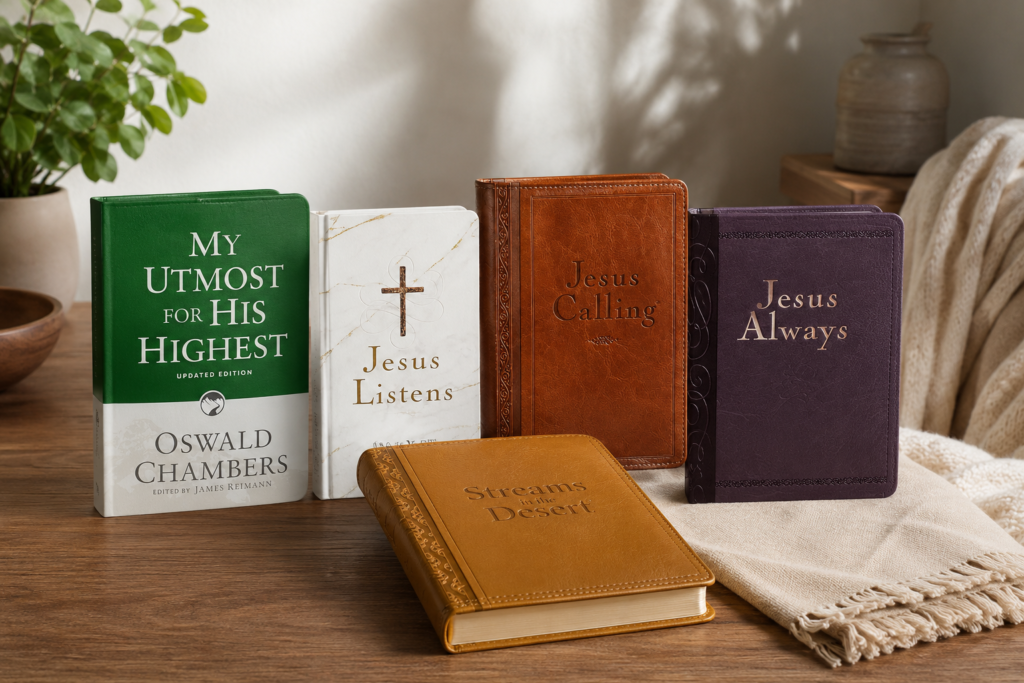
Structured devotionals give you fresh content daily without planning what to read. Look for books written specifically for midlife women that address real issues like caring for aging parents, adult children’s struggles, or identity shifts.
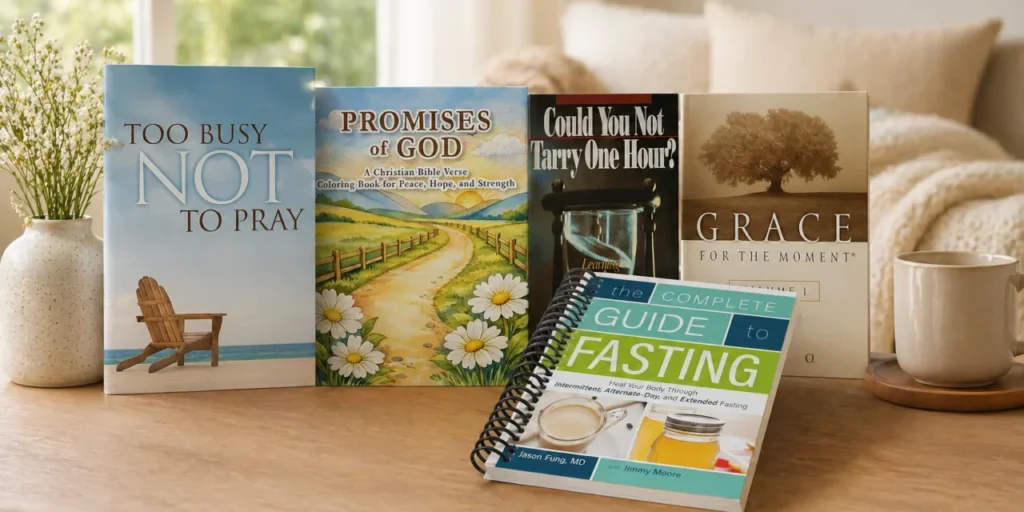
Recommended Product: Grace for the Moment by Max Lucado offers short, powerful daily readings that take 3-5 minutes. Each entry includes a Scripture and practical application.

3. Coloring Prayer Books
Combining prayer with coloring activates different parts of your brain and reduces stress. These books include Scripture and prayers to color while meditating.
Recommended Product: Promises of God: A Christian Bible Verse Coloring Book feature intricate designs with verses and short prayers. The act of coloring slows you down naturally.

4. Liturgical Prayer Books
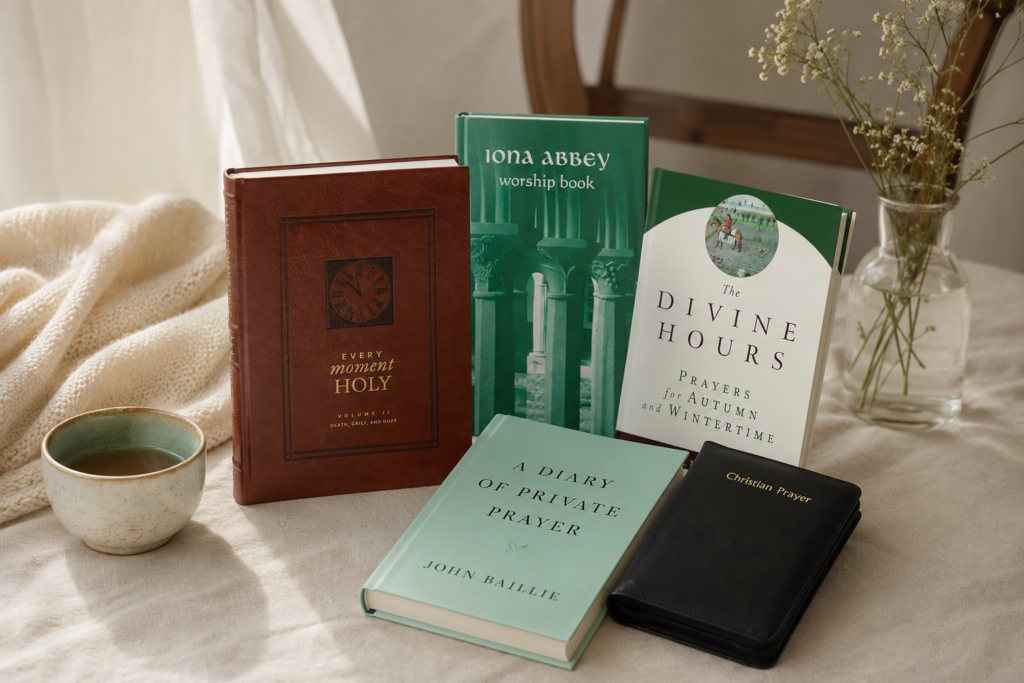
Liturgical prayers (written prayers from Christian tradition) give you words when you can’t find your own. They connect you to centuries of believers.
Recommended Product: Common Prayer: A Liturgy for Ordinary Radicals includes morning, midday, and evening prayers for each day, plus prayers for special occasions.

5. Silent Retreat Guides for Home
Creating mini-retreats at home gives you extended prayer time without travel costs. Guides walk you through multi-hour formats.
Recommended Product: Too Busy Not to Pray by Bill Hybels includes retreat-style exercises you can do at home, breaking them into manageable segments.

6. Fasting and Prayer Guides
Fasting deepens prayer by adding physical intentionality. Guides explain different fasting types and provide prayer focuses.
Recommended Product: The Complete Guide to Fasting by Jimmy Moore and Dr. Jason Fung covers health aspects, while Celebration of Discipline by Richard Foster addresses spiritual fasting practices.

7. Prayer Partner Accountability Tools
Praying with others keeps you consistent. While not a physical product, books on prayer partnerships provide frameworks.
Recommended Product: Could You Not Tarry One Hour? by Larry Lea teaches a structured hour of prayer you can do with partners, including worksheets.

Conclusion
From this list, the standout choice is The Prayer Map for Women journal (Practice #1). This tool addresses the reality that midlife often brings racing thoughts, decision fatigue, and the weight of everyone else’s needs pressing in. Unlike blank journals that can feel intimidating at the end of a long day, this structured format removes the burden of deciding what to write.
You simply fill in prompts about what you’re grateful for, what weighs on your heart, who needs prayer, and where you need God’s guidance.
The visual map layout also appeals to women who think non-linearly or whose minds jump between topics. You can write one sentence or paragraphs, pray for two minutes or twenty.
One reviewer mentioned using it during a season of caring for her mother with dementia while her own daughter navigated a difficult pregnancy.
The journal gave her a safe place to process conflicting emotions without judgment. Another noted that looking back through completed maps showed her patterns in what she worried about versus what actually happened, strengthening her trust in God’s faithfulness.
You can start using The Prayer Map tonight. Keep it on your nightstand with a pen.
Before you scroll your phone or turn on Netflix, open to the next page and spend just five minutes mapping out your prayers.
The act of writing slows your mind and helps you notice where God’s been present in your day, even in small ways.
If journaling isn’t your preference, try the Scripture Memory Cards (Practice #2) as a close second. They need zero writing and work brilliantly for women who process verbally or need something tactile.
Keep a card in your car’s cupholder or clipped to your sun visor, and you’ll naturally review it at stoplights.
Pick one tool this week. Don’t wait for the perfect time or a less busy season, because midlife rarely offers those.
Order the product that resonates most, or start today with a free prayer app if you need something immediate.
Tell one friend what you’re trying so she can ask how it’s going. Small, consistent steps matter more than grand plans that never launch.
Frequently Asked Questions
What if I’m not a morning person but all the advice says to pray first thing?
Prayer practices work at any time of day. Evening prayer before bed, lunchtime prayers, or even 9 PM after kids are down all count.
The “morning is best” advice reflects when some people focus well, but God doesn’t favor morning prayers over evening ones.
Match your practice to your natural rhythms and actual schedule. Night owls often find evening reflection more meaningful than groggy morning tries.
How do I stick with prayer when I’ve failed at every habit I’ve tried?
Start absurdly small. Don’t commit to 30 minutes of prayer journaling if you’ve never maintained a habit.
Instead, commit to reading one Scripture card while your coffee brews for two weeks straight.
That’s it. Once that becomes automatic, add one more minute.
Habit research shows tiny, consistent actions build neural pathways better than ambitious starts that fizzle.
Also, prepare for interruptions as opposed to viewing them as failure. Missed a day?
Start again the next morning without guilt spirals.
Are prayer apps too impersonal or distracting since they’re on my phone?
Prayer apps work well for some women and terribly for others. The benefit is having prompts exactly when you need them, integrated into a device you already carry everywhere.
The downside is notification overload and the temptation to check email when you open your phone to pray.
Test this about yourself: if you can open a prayer app without getting distracted by other apps, they’re useful. If not, stick with physical tools like journals, cards, or books that have no notifications.
What’s the difference between devotionals and prayer books, and which do I need?
Devotionals typically include a Scripture reading, a reflection or teaching, and a brief prayer someone else wrote. Prayer books contain prayers you pray yourself, either written by others (liturgical prayers) or blank space for your own words (journals).
Devotionals work well when you need input and teaching.
Prayer books work when you need to process your own thoughts and bring your specific situation to God. Many women use both: a devotional for input and a journal for personal response.
How can I pray when I’m too exhausted to form coherent thoughts?
Exhaustion is common in midlife, especially if you’re sandwiched between generations of care. In those moments, lean on breath prayers (one sentence repeated), pre-written prayers from liturgical books, or simply sitting quietly in God’s presence without words.
The Psalms include prayers of exhaustion and complaint that you can read aloud when you have no energy to create original prayers.
God doesn’t need eloquence or energy, just your presence.
Is it worth spending money on prayer tools when I could just pray for free?
You absolutely can pray effectively with no purchased products. However, tools serve specific purposes: they remove decision fatigue about what to pray, they provide structure when your mind wanders, they create physical cues that signal prayer time to your brain, and they offer fresh content when you feel stale.
Think of them like workout equipment.
You can exercise for free, but a yoga mat, good shoes, or weights often increase consistency and effectiveness. Buy tools that address your specific obstacles to prayer.
What if these practices feel rote or meaningless after a few weeks?
Spiritual disciplines often cycle through seasons of richness and dryness. When a practice feels rote, first give it a bit more time.
Meaningful growth sometimes happens beneath the surface before you sense it.
If staleness continues, switch practices for a season. Move from journaling to Scripture memory, or from solo prayer to praying with a friend.
Variety prevents burnout.
Also examine whether you’re doing the practice out of obligation versus desire to connect with God. Obligation kills joy.
If a tool has become a checkbox, set it aside and try something that rekindles genuine conversation with God.
Find out our Recommended Devotionals to Deepen Your Daily Faith Walk; visit: https://illuminatedresources.com/best-devotionals-to-deepen-your-daily-faith-walk/