Finding the right daily devotional can transform scattered spiritual routines into meaningful encounters with Scripture.
Devotional books come in dozens of styles, from five-minute morning reads to deep evening reflections that require journaling space and quiet contemplation. The market offers everything from century-old classics written by theological giants to modern interpretations designed for busy professionals checking their phones between meetings.
Some center entirely on Scripture exposition, while others weave in poetry, personal stories, or topical themes like grief, parenting, or finding peace in chaos.
The differences matter because your schedule, spiritual maturity, and current life season all shape which devotional actually gets used versus which one collects dust on your nightstand. A working parent with three kids under five needs something different than a retiree with open mornings or a college student processing big questions about faith and purpose.
Notable features that separate helpful devotionals from forgettable ones include actual Bible text printed on the page (not just references), reflection questions that prompt personal application, prayer guides that teach you to talk with God rather than just read someone else’s words, and enough white space or journal prompts to capture your own insights as you read.
5 Highly-Rated Devotionals
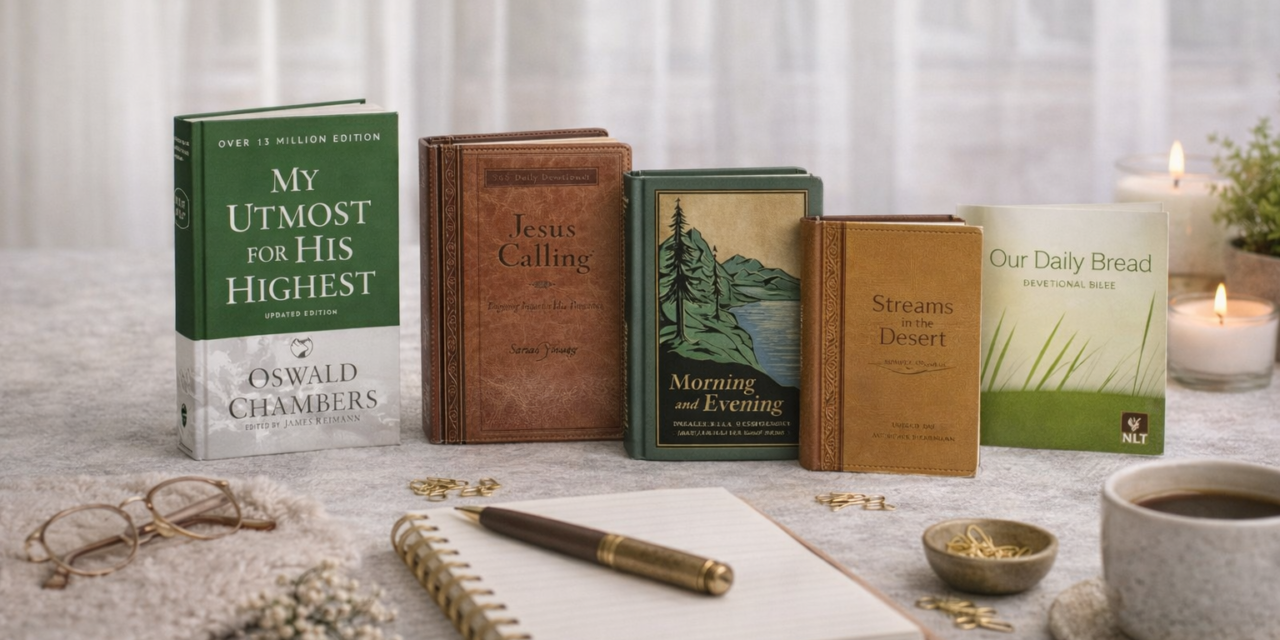
1. My Utmost for His Highest by Oswald Chambers
This classic has sold millions of copies since its first publication and stays a bestseller nearly a century later. Each daily entry includes a short Bible verse, a penetrating meditation from Chambers’ teachings, and application points focused on surrendering your will to God’s purposes.
The writing challenges comfortable Christianity and pushes toward deeper commitment.
At just 4×7 inches, the book fits easily in a work bag or on a crowded nightstand, making it practical for people who read during commutes or lunch breaks.

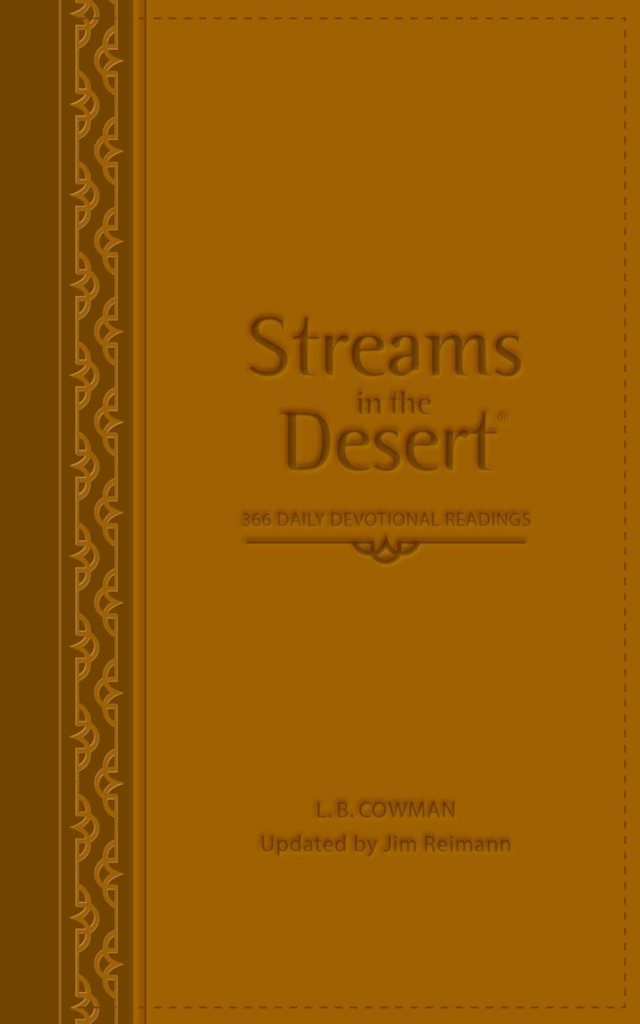
2. Streams in the Desert by Lettie B. Cowman
Written during a season of personal suffering, this devotional speaks directly to anyone walking through difficulty, loss, or prolonged waiting. Cowman blends Scripture with poems, hymn lyrics, and stories of faith under pressure.
Each entry offers comfort without toxic positivity, acknowledging pain while pointing toward God’s sustaining presence.
The book includes space for journaling and personal notes, allowing you to track your own move through hard seasons. Generations of readers return to this one during their darkest times and find it meets them exactly where they are.
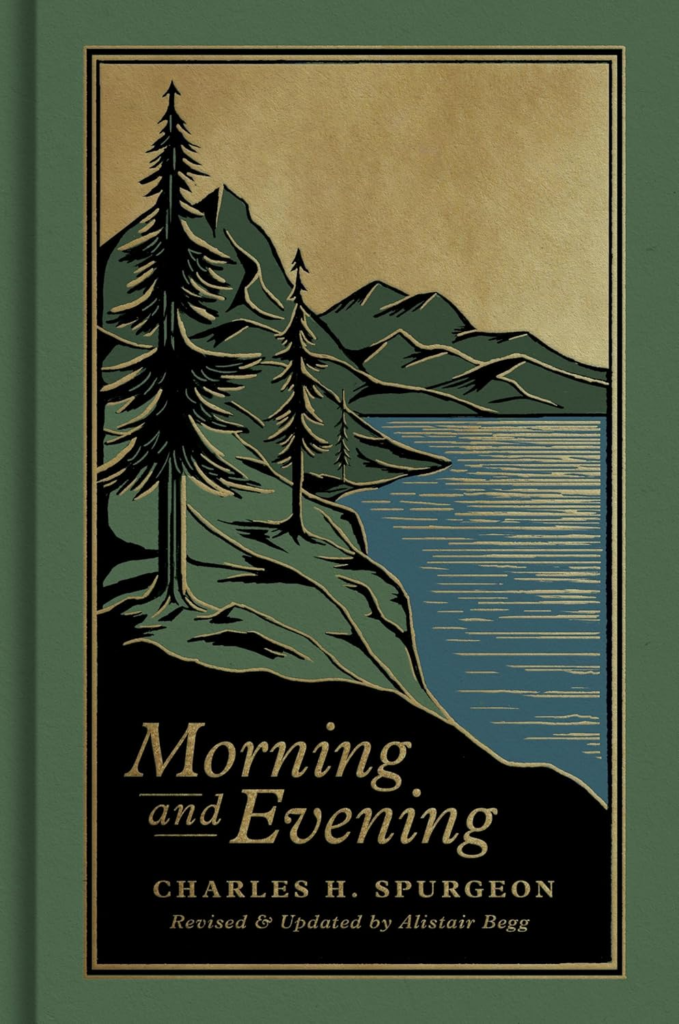
3. Morning and Evening by Charles Spurgeon
Spurgeon offers two readings per day, one designed for morning meditation and another for evening reflection. His exposition of Scripture runs deeper than many modern devotionals, unpacking theological richness in accessible language.
Each entry focuses on a single verse, examining its context and application with the care of a skilled teacher.
The rhythm of morning and evening readings creates natural bookends for your day, starting you off with biblical truth and ending with the same. Spurgeon’s voice feels like a wise pastor speaking directly to you, warm but never watering down difficult passages.
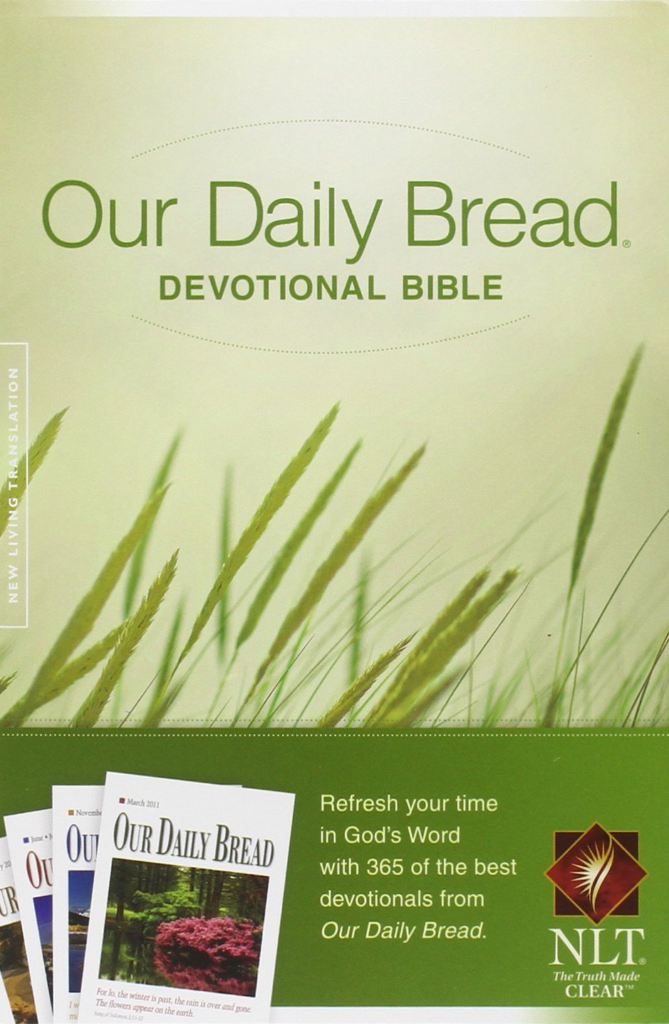
4. Our Daily Bread
This devotional series comes from RBC Ministries and offers 365 days of straightforward, accessible entries perfect for beginners or anyone wanting consistency without complexity. Each page includes a Bible passage, a short reflection connecting Scripture to everyday life, a prayer, and a simple application point.
The writing comes from many contributors, giving you varied voices and perspectives throughout the year.
Entries run under five minutes, making this ideal for early mornings before work or quick evening reading before bed. Our Daily Bread also exists as a free app and website, so you can access the same content digitally if you prefer not carrying a physical book.
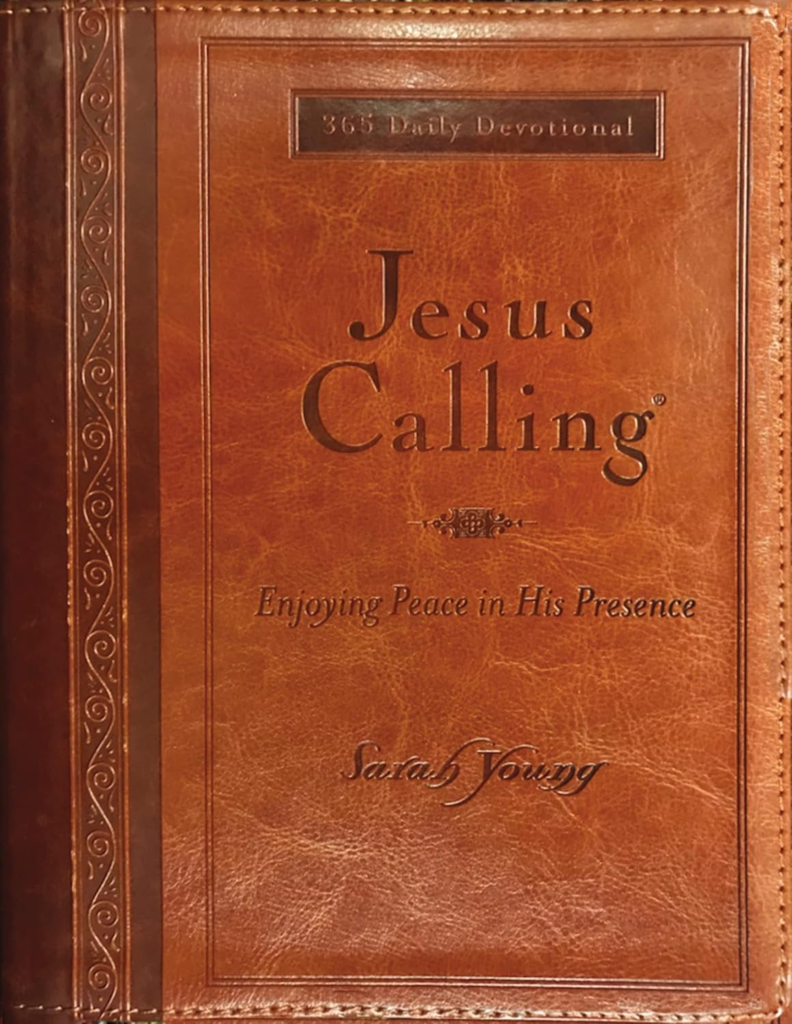
5. Jesus Calling by Sarah Young
Young wrote this devotional as Jesus speaking directly to the reader, blending paraphrased Scripture with devotional prose in first-person voice. Each entry includes the main devotional thought followed by relevant Bible verses for deeper study.
The writing emphasizes God’s personal love and want for relationship with you, creating an intimate tone that resonates with people seeking to hear God’s voice more clearly.
Some readers appreciate the direct, personal approach while others prefer traditional third-person exposition, so reading a sample before buying helps decide if this style connects with you. The book has spawned numerous spin-offs for different audiences like teens, men, and specific themes.
Why Our Daily Bread Stands Out
After reviewing all five options, Our Daily Bread earns top recommendation for most people starting or restarting a devotional habit. The consistent structure removes guesswork about what you’re supposed to do each day.
You simply read the passage, follow the reflection, pray through the prompts, and consider the application point.
Nothing fancy or complex, just solid biblical teaching applied to real life.
The variety of contributors keeps the content fresh rather than getting predictable after a few months. One day you might read an insight about trusting God during job loss, the next day a meditation on seeing God’s glory in creation, followed by practical wisdom about handling conflict at work.
The range covers the full spectrum of Christian living without getting stuck in repetitive themes.
For busy schedules, the five-minute format actually works. Many devotionals claim brevity but still require ten or fifteen minutes if you engage thoughtfully.
Our Daily Bread truly delivers quick, meaningful content that fits into tight morning routines.
You can read it while coffee brews or during the few quiet minutes after everyone else leaves for school or work.
The free digital access matters more than it might seem at first. If you forget your physical book during a trip or want to check the devotional during a lunch break, you can pull it up instantly on your phone or laptop.
This accessibility means fewer broken streaks and more consistency over time.
Consistent habits matter more than perfect habits, and Our Daily Bread makes consistency achievable. Start with this one, build your rhythm, then branch out to deeper or more specialized devotionals as your practice matures.
Frequently Asked Questions
How do I know if a devotional has sound theology?
Check the publisher first. Established Christian publishers like Zondervan, Crossway, NavPress, and InterVarsity Press maintain theological standards for what they publish.
Read reviews specifically mentioning doctrinal accuracy or biblical faithfulness rather than just emotional impact.
Look inside the preview pages to verify the devotional actually quotes and explains Scripture rather than just dropping verse references with personal stories. If a devotional makes you uncomfortable with how it handles the Bible or presents God’s character in ways that contradict Scripture, trust that instinct and find a different option.
Sound devotionals should align with core Christian teaching held across denominational lines, focusing on who God is according to His Word rather than on popular psychology or self-help dressed in spiritual language.
Can I use many devotionals at once or should I stick with one?
You can absolutely use many devotionals, but start with just one until you establish consistency. Adding a second only makes sense once the first becomes a firm habit you rarely skip.
Some people enjoy reading a morning devotional like Morning and Evening plus a topical one related to their current life season, like a parenting devotional or one focused on anxiety.
Others find many books overwhelming and prefer going deep with a single resource. The goal is spiritual growth, not checking boxes, so if using two devotionals makes you rush through both without real reflection, scale back to one.
Your heart posture matters more than the quantity of content you consume.
What if I miss days or fall behind?
Just pick up where you are rather than trying to catch up. Missing days happens to everyone.
Parents deal with sick kids, work deadlines hit, life gets chaotic.
Guilt about missing days often leads to quitting entirely because the gap feels too big to overcome. If you miss a week, simply open to today’s date and start fresh.
Most devotionals with dated entries work perfectly fine read out of order if you prefer continuing sequentially instead of skipping ahead.
The point is connecting with God through His Word, not maintaining a perfect streak. Grace matters more than performance.
Are devotionals necessary if I already read the Bible daily?
No, devotionals are tools, not requirements. Straight Bible reading with personal prayer and reflection accomplishes the same goal.
Devotionals simply provide structure, teaching, and fresh perspectives that help when you feel stuck or don’t know how to apply what you’re reading.
Think of them like training wheels or guided tours. Someone new to Scripture benefits from the guidance.
Someone more mature might use them seasonally when studying a specific topic or enjoy the community of reading what millions of others read daily.
But direct Bible reading always trumps devotional reading if you have to choose. A devotional supplements Scripture but never replaces it.
How long should I stick with one devotional before switching?
Complete at least one full month before evaluating whether a devotional works for you. The first few days of anything new feel awkward and unfamiliar.
By day thirty, you know whether the style resonates, the length fits your schedule, and the content speaks to where you are spiritually.
Some classics like My Utmost for His Highest take time to appreciate because Oswald Chambers writes in an older, denser style that rewards patience. If a devotional still feels like a chore after a month of genuine engagement, switch without guilt.
Better to find one you’ll actually use than to force yourself through one that doesn’t connect.
Should I journal along with my devotional?
Journaling amplifies the impact for most people but isn’t mandatory. Writing forces you to process what you read rather than letting it slide through your mind without sticking.
Even a single sentence per day like “This verse reminded me to…” or “I need to work on…” creates a record you can review later to see growth patterns.
If writing feels like a burden, try voice memos on your phone instead, or simply sit quietly for two extra minutes thinking through one question the devotional raised. Some form of active response, even mental, helps move truth from head knowledge into life change.
Can teenagers and adults use the same devotionals?
Most of the classic devotionals like Streams in the Desert or Our Daily Bread work fine for mature teenagers and adults alike. The reading level and concepts suit anyone from high school age up.
Very young teens or middle schoolers might struggle with vocabulary or abstract theological ideas in older classics, so age-specific devotionals help at that stage.
But a thoughtful sixteen-year-old often connects deeply with the same content their parents read. Family devotions work well when everyone reads the same entry and discusses it together, with parents helping younger members understand tougher concepts.
Check the recommended age on devotionals marketed toward youth, and don’t hesitate to let a mature teen try an adult version if they show interest.
Find out more of our Recommended Devotional; visit: https://illuminatedresources.com/top-devotional-trends-on-amazon-right-now-and-what-midlife-women-actually-need/