Midlife brings a unique set of challenges that can shake even the strongest faith. Empty nests leave houses quieter than you ever imagined. Aging parents need more care.
Your body changes in ways that feel unfamiliar.
Career paths shift or end entirely. In these moments, faith literature offers something different from the endless stream of self-help content.
These books root their encouragement in Scripture, pointing you toward Christ as opposed to your own strength.
They help you process grief, reframe identity, and find purpose when the old markers of your life no longer fit.
The best Christian books for this season share common threads. They teach you how to study the Bible for yourself instead of just reading what others say about it.
They address real struggles like anxiety, comparison, and feeling invisible without offering quick fixes.
They remind you that resilience comes from knowing God more deeply, not from trying harder. You’ll find practical tools alongside theological depth, written by women who’ve walked through their own midlife valleys.
Some focus on emotional health, others on marriage or purpose, but all of them lead you back to the unchanging truth of the gospel.
1. Women of the Word by Jen Wilkin
Wilkin wrote the definitive guide for studying Scripture in a way that engages both your heart and mind. She lays out a clear, repeatable method that takes you beyond surface-level reading into genuine understanding.
The book teaches you to comprehend what a passage says, interpret what it means, and then apply it to your life.
For women overwhelmed by Bible study programs or paralyzed by where to start, this creates a sustainable path forward. The skills you learn here will serve you for decades, making it one of the most practical investments you can make.

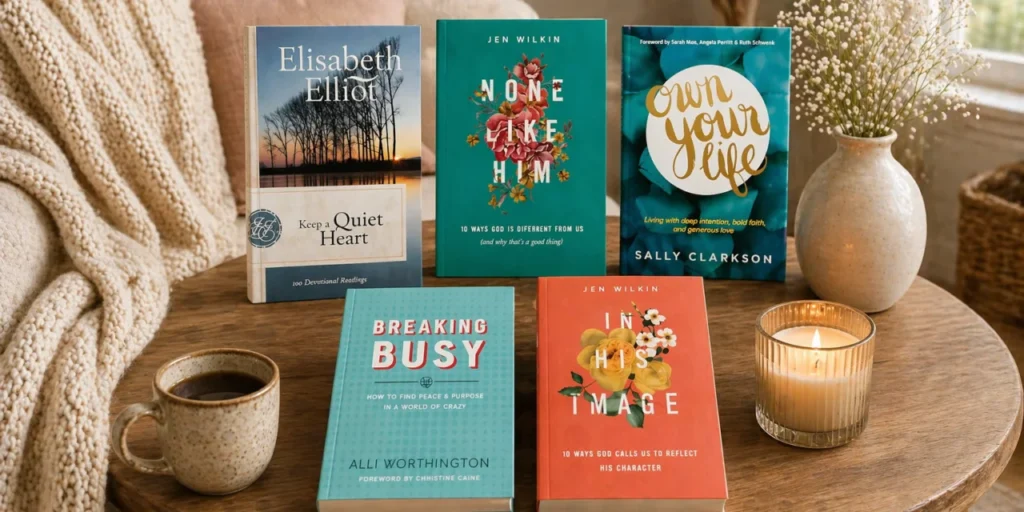
2. In His Image by Jen Wilkin
This book explores ten attributes of God that you’re called to reflect as His image-bearer. Wilkin walks through characteristics like goodness, justice, and mercy, showing how they shape your daily decisions and relationships.
Midlife often brings questions about who you are and what you’re becoming.
This book answers those questions by anchoring your identity in God’s unchanging character. Each chapter includes reflection questions that push you beyond intellectual agreement into real transformation.
You’ll finish with a clearer picture of what spiritual maturity actually looks like.

3. None Like Him by Jen Wilkin
Wilkin examines ten attributes that belong to God alone, the ones you can’t share no matter how hard you try. She covers His eternality, omniscience, omnipotence, and other characteristics that set Him apart.
This matters in midlife because you’ve probably spent decades trying to control outcomes, know all the answers, or be everything to everyone.
The book gently shows you the freedom that comes from accepting your limits and trusting God’s unlimited power. Reading it feels like exhaling after holding your breath for too long.

4. Keep a Quiet Heart by Elisabeth Elliot
Elliot’s devotional writings draw from her years as a missionary and a widow who faced profound loss. She writes about finding peace in the middle of chaos, trusting God when nothing makes sense, and choosing quiet obedience over frantic striving.
Her prose cuts through modern noise with timeless wisdom.
Each short chapter offers a meditation you can read in five minutes but think about for days. For women dealing with health diagnoses, relationship tensions, or the general upheaval of midlife, Elliot’s words steady your heart.

5. Let Me Be a Woman by Elisabeth Elliot
Originally written as letters to her daughter before her wedding, this book examines what it means to be a woman according to God’s design. Elliot doesn’t shy away from counter-cultural positions, and she challenges much of what modern culture says about femininity and purpose.
Midlife women questioning their value as they age will find solid footing here.
The book reminds you that your worth comes from Christ, not from your productivity, appearance, or the roles you’ve filled. Elliot’s confidence in Scripture gives you permission to stand firm in your own convictions.

6. The Freedom of Self-Forgetfulness by Timothy Keller
Keller’s short book addresses the ego problem that plagues modern life. He shows how the gospel frees you from both pride and insecurity by giving you an identity that doesn’t depend on others’ opinions.
In a season when you might feel overlooked or irrelevant, this book reframes the entire conversation.
Self-forgetfulness isn’t about low self-esteem. It’s about being so secure in Christ that you don’t need constant affirmation.
You can read it in an hour, but the concepts will reshape how you think about yourself for years.

7. The Best Yes by Lysa TerKeurst
TerKeurst tackles the people-pleasing trap that leaves you exhausted and resentful. She offers biblical wisdom for making decisions when everyone wants something from you.
The book teaches you to distinguish between good opportunities and God’s best for this season.
For women struggling with boundaries or chronic overcommitment, this provides both permission to say no and a framework for doing it. TerKeurst includes practical scripts and decision-making tools that you can use immediately.
Her writing feels like a conversation with a wise friend who sees through your excuses with compassion.

8. Breaking Busy by Alli Worthington
Worthington’s book confronts the busyness epidemic with practical strategies for reclaiming your time and sanity. She helps you identify what actually matters and eliminate the rest.
The chapters walk through common time-wasters and energy drains, offering biblical choices rooted in Sabbath rest and intentional living.
Midlife often means juggling aging parents, grown children, work demands, and church commitments. This book won’t add more to your plate.
Instead, it helps you clear space for what God is actually calling you to do right now.

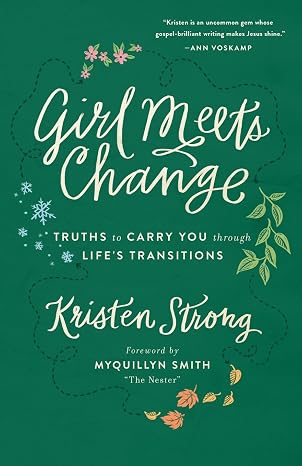
9. Girl Meets Change by Kristen Strong
Strong wrote this for women facing unwanted transitions. She thanks the grief that comes with change while pointing toward hope in God’s presence.
Whether you’re dealing with an empty nest, a job loss, a move, or health changes, this book meets you in the uncertainty.
Strong doesn’t minimize your pain or rush you through the process. She shows you how to find God in the middle of upheaval, not just on the other side of it.
Each chapter ends with reflection questions and practical next steps.
10. Own Your Life by Sally Clarkson
Clarkson encourages you to live with intention instead of just reacting to demands. She writes about creating a home and life that reflect your values, cultivating meaningful habits, and living generously.
The book pushes back against the cultural narrative that midlife is about winding down.
Instead, Clarkson presents it as a time to step more fully into the unique calling God has given you. Her writing blends practical advice with deep spiritual reflection, helping you see ordinary moments as opportunities for kingdom impact.

Out of this entire list, Women of the Word stands as the most valuable investment you can make. Every other book on this list will make more sense and have deeper impact if you know how to study the Bible for yourself.
Wilkin’s method is simple enough to start this week but profound enough to use for the rest of your life.
You don’t need special training or hours of free time. You just need a Bible, something to write with, and the willingness to slow down and think carefully about what you’re reading.
The book transformed how I approach Scripture. Before reading it, I mostly jumped around looking for verses that applied to my immediate problems.
I read devotionals that told me what other people learned from the Bible.
Wilkin showed me how to dig into a passage myself, understand its context, and let it shape my thinking over time. That skill has carried me through losses, transitions, and hard questions that no devotional could address directly.
Midlife demands resilience that comes from deep roots, not superficial encouragement. When you know how to study God’s Word, you can face whatever comes next with confidence in His character and promises.
Start here, then branch out to the other books based on your specific needs.
Grab Women of the Word on Amazon today and commit to working through it over the next month. Get a journal to work through the exercises, and consider inviting a friend to read it with you.
The accountability will help you actually apply what you learn instead of just reading and forgetting.
Your future self, facing challenges you can’t see yet, will thank you for building this foundation now.
Frequently Asked Questions
What makes Christian faith books more effective than general self-help for midlife struggles?
Faith literature roots all its advice in Scripture and points you toward Christ as opposed to your own strength. Self-help books typically focus on what you can do, which creates more pressure when you’re already exhausted. Christian books acknowledge your limits and direct you to God’s unlimited power and grace.
They address not just symptoms but the heart issues underneath, like misplaced identity or lack of trust.
The transformation they offer lasts because it’s based on unchanging truth, not shifting cultural trends.
How can I realistically fit reading into an already overwhelming schedule?
Start with just 15 minutes a day, preferably at the same time so it becomes a habit. Many women read during their morning coffee before the house wakes up.
Audiobooks work well during commutes or while doing dishes.
You can also swap some social media scrolling for reading time. If you’re using a method like Wilkin’s Bible study approach, 20-30 minutes gives you meaningful progress.
Remember that consistent small amounts of reading will change you more than occasional marathon sessions.
Can these books actually help with body image issues and feeling invisible as I age?
Several of these books directly address finding your identity in Christ as opposed to cultural standards. None Like Him helps you accept your human limits, including your aging body.
The Freedom of Self-Forgetfulness shows how gospel-rooted identity frees you from constant comparison.
Let Me Be a Woman challenges the culture’s definition of beauty and worth. These books won’t give you a six-step plan for loving your body, but they’ll reframe the entire conversation by showing you where your value actually comes from.
What if I’m in a season of doubting my faith? Which books would help?
Start with Keep a Quiet Heart or Try Softer. Both offer gentle, compassionate approaches that meet you in uncertainty as opposed to shaming you for questions.
Elliot’s writing thanks the mystery and difficulty of faith while pointing toward trust.
Kolber’s book validates the emotional and physical toll of hard seasons. You might also benefit from Steadfast Love, which shows how to hold onto God’s character when circumstances shake your confidence.
Avoid books that feel too demanding right now.
Stick with ones that emphasize God’s faithfulness over your performance.
Do any of these books specifically address marriage struggles or family transitions?
Yes, several tackle these directly. The Mingling of Souls focuses entirely on marriage with biblical teaching on communication, intimacy, and conflict.
Girl Meets Change walks through all kinds of transitions including empty nest and shifting family dynamics.
Own Your Life helps you live intentionally through changing seasons, including how you relate to grown children. The Best Yes teaches boundary-setting that can transform family relationships.
Breaking Busy addresses the overwhelm of juggling family demands with other responsibilities.
Are there ways to access similar content without buying all these books?
Many authors offer free content through podcasts, blogs, or newsletters. Jen Wilkin has teaching available through The Village Church website.
Timothy Keller’s sermons are archived online.
Some authors like Gretchen Saffles post daily devotional content on Instagram. Your church library might carry several of these titles.
You could also suggest a book study where everyone buys one book to read together, making it more affordable.
That said, owning books you can mark up and return to during different seasons has unique value.
How can I get the most value from discussing these books with other women?
Pick one book and read it over 4-6 weeks as a group, meeting weekly to talk about specific chapters. Come prepared with one thing that challenged you and one thing you want to apply.
Keep the focus on Scripture and personal application as opposed to just sharing opinions.
If someone in the group has walked through the issue the book addresses, invite her to share what helped. End each meeting by praying specifically for the struggles people mentioned. The combination of reading, discussion, and prayer creates transformation that reading alone often doesn’t.
Find out our Recommended Christian Books for Women in Midlife Transition; visit: https://illuminatedresources.com/best-christian-books-for-women-in-midlife-transition-identity-shifts-relationships-boundaries-roles-changing/